Data Structure and Algorithm Design II
Chapter 8
Xingang (Ian) Fang
Sections
Combinatorics
Combinatorics in C++
Combinatorics And Counting
Xingang (Ian) Fang
Overview
Combinatorics is a branch of mathematics that deals with counting, arrangement, and combination of objects. It is about finding ‘how many’ possible structures of a certain kind exist. Combinatorics provides tools to answer questions like:
How many ways can a set of objects be arranged?
How many combinations or selections can be made from a group?
Significance
Applications in CS.
Analyze the complexity of algorithms
Design efficient algorithms
Develop data structures that can efficiently store and retrieve data
Solve problems in cryptography, machine learning, and other areas of computer science
Counting Principles
The Sum Rule:
Mutually exclusive events.
Example: If you are allowed to choose one from 3 shirts and 4 pants, then you have a total of \(3+4=7\) different pieces of clothing to choose from.
The Product Rule:
Independent events happening together.
Example: Using the same clothing example, if you want to decide on an outfit combination of one shirt and one pants out of the 3 shirts and 4 pants, then you have \(3×4=12\) possible combinations to choose from.
Counting Principles (cont.)
The Division Rule:
Correct constant overcounting.
Example: If you count n edges of a polygon by starting vertex and ending vertex, then each edge is counted twice. So, the number of edges is n/2.
Include-exclude principle
Correct the overcounting that occurs when summing up sets with overlapping.
Two sets \(|A \cup B| = |A| + |B| - |A \cap B|\)
Three sets \(|A \cup B \cup C| = |A| + |B| + |C| - |A \cap B| - |B \cap C| - |A \cap C| + |A \cap B \cap C|\)
Counting Principles (cont.)
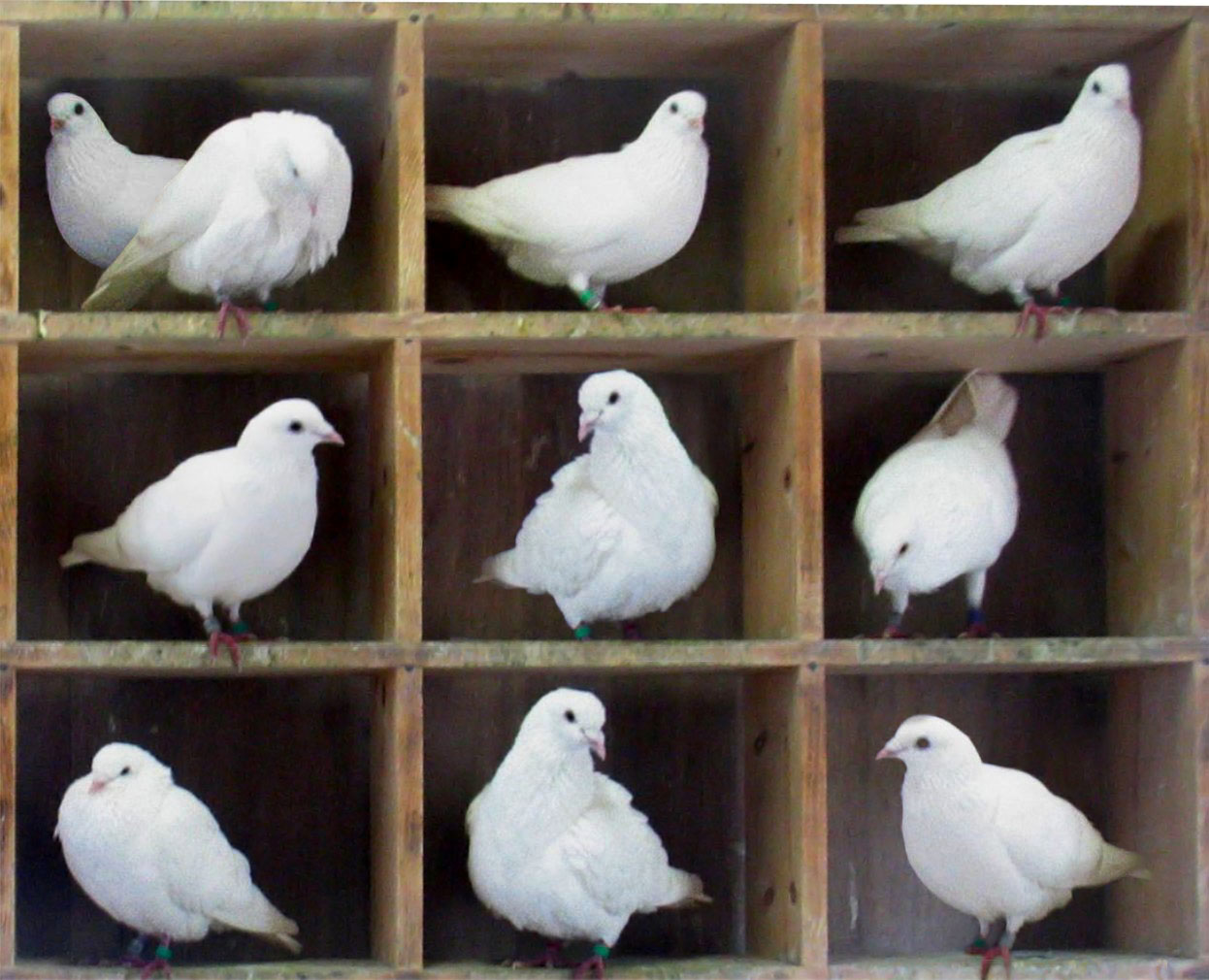
Pigeonhole principle
If n items are put into m containers, with \(n>m\), then at least one container must contain more than one item.
Recurrence relations
Count sub-problems and combine the results to get the final answer.
Category of problems
Arrangement
Ordering and organizing objects
Permutation (order matters)
standard
all objects: \(P^n = n!\)
r objects: \(P^n_r = \frac{n!}{(n-r)!}\)
circular
all objects: \((n-1)!\)
r objects: \(C^n_r \times (r-1)!\)
allow repetition
r objects: \(n^r\)
multi-set
all objects with multiple duplicate sets
\(\frac{n!}{n_1!n_2!...n_k!}\)
Category of problems (cont.)
Selection (order does not matter)
Selecting objects from a set
Order does not matter
Combination
Find permutation first, then divide by r! to correct overcounting
standard \(C^n_r = \frac{n!}{r!(n-r)!}\)
allow repetition \(\frac{(n+r-1)!}{r!(n-1)!}\)
Subset
Number of all subsets \(2^n\)
\(\sum_{k=0}^n C^n_k = 2^n\)
Category of problems (cont.)
Distribution (Partition)
Distributing objects into groups
Distributing n identical objects into r distinct groups
\(C^{n+r-1}_n\)
Distributing n distinct objects into r distinct groups
\(r^n\)
Integer partition - represent integer n as sum of positive integers (value up to k)
\(p(n,k) = p(n,k-1) + p(n-k,k)\)
recursive algorithm
hard to find closed form solution in math
Geometric counting
Correct Overcounting In Selection
Example. Select 3 letters from A, B, C, D. Order does not matter.
To solve the problem a good strategy is to first find the number of permutations and then divide by the number of ways to arrange the 3 letters.

Each row represent all permutations of a unique combination. As each row have \(3!\) permutations, using the division rule, we can correct the overcounting.
The final result is \(C^4_3 = P^4_3/P^3_3 = 4\).
Some Strategies
Direct counting
Break down into cases
sum - exclusive events
product - independent events
Counting by complement
\(Count = Total - \overline{Count}\)
Counting by recursion
May resort to an algorithm
Solve Combinatorics Problems
Identify the type of problem
Arrangement
Selection
Distribution/Partition
Identify the constraints
Repetition
Order
Grouping
Identify the counting principle
Ron’s Greasy Spoon
Build your own breakfast from the menu:
1 egg dish 4 choices: Scrambled, Fried, Poached, Omelette
2 sides 5 choices: Bacon, Sausage, Hash Browns, Toast, Pancakes
1 drink 4 choices: Coffee, Tea, Milk, Orange Juice
How many different breakfasts can you order?
Product rule: choose 1 egg dish, 2 sides, 1 drink, independent events
Choose 1 egg dish: 4 ways
Choose 2 sides: \(C^5_2 = 10\) ways
Choose 1 drink: 4 ways
Total number of breakfasts: \(4 \times 10 \times 4 = 160\)
More problems 1
How many 8 bit strings start with either 110 or 101?
Sum rule: select two 5 bit strings, exclusive to each other
For each: size 5 permutation with repetition \(2^5\)
Total: \(2^5 + 2^5 = 64\)
Six person committee { a, b, c, d, e, f}. Select President, Vice President, and Treasurer and either a or b must be President. Each person can have only one role.
Product rule: Select 3 roles, independent events
Order matter? Yes, President, Vice President, Treasurer are different roles
President: 2 choices
Vice President: 4 choices (anyone but President)
Treasurer: 3 choices (anyone but President and Vice President)
Anagram
An anagram of a string is another string that contains the same characters, possibly in a different order. For example, “listen” can be rearranged to form “silent” or “enlist”, making them anagrams.
Question: How many anagrams of the word “mississippi” are there?
Order matters: permutation
Repetition: 4 i’s, 4 s’s, 2 p’s
Division rule to correct overcounting
E.g. The order of the 4 i’s does not matter, so divide by 4!
Total number of anagrams: \(\frac{11!}{4!4!2!} = 34650\)
How many ways to give 5 gifts of the same type to 3 children?
This is a partition problem to distribute 5 identical items to 3 distinct bins.
The well-known method called “star and bar”:
The idea is to put 5 items (*) together with 2 separators (|) in a line like: * * * | * *|.
Out of the total 7 positions, pick 5 positions to put the stars.
A less efficient method is to use the sum rule and break down into cases. Calculate the number of ways for various partitions of 5 items into 3 bins. Like 5-0-0, 4-1-0, 3-2-0, 3-1-1, etc. Then add them up.
Poker Problems♠️
To find number of possible hands when you draw 5 random cards.
Total number of possible hands:
5 cards from 52 cards
\(C^{52}_5 = 2598960\)
Royal flush: 1 each suit, 4 total
Straight flush: 36 ways
5 consecutive cards, same suit
Select starting card from Ace, 2, … to 10 10 ways per suit: \(C^{10}_{1}\)
Select suit: \(C^{4}_{1}\)
Remove over counting: royal flush
Four of a kind: 624 ways
Select 2 ranks (order matters): \(P^{13}_{2}\)
Select a suite for 1 rank: \(C^{4}_{1}\)
Poker Problems (cont.)
Full house: 3744 ways
Select 2 ranks from 13 ranks (order matters) \(P^{13}_{2}\)
Select 3 suits for the 3 cards: \(C^{4}_{3}\)
Select 2 suits for the 2 cards: \(C^{4}_{2}\)
Flush: 5108 ways
Select 5 ranks from 13 ranks: \(C^{13}_5\)
Select a suit: \(C^{4}_{1}\)
Remove overcounting: straight flush, royal flush
Straight 10200 ways
Product rule
Select the starting card: \(C^{10}_{1}\)
Select the suits for each card (repetition allowed) : \(4^5\)
Remove overcounting: straight flush, royal flush
Poker Problems (cont.)
Three of a kind: 54912 ways
Product rule
Select a rank for 3 cards: \(C^{13}_{1}\)
Select the suits for 3 cards: \(C^{4}_{3}\)
Select 2 ranks for the other 2 cards: \(C^{12}_{2}\)
Select the suits for the other 2 cards: \(4^2\)
Two pairs: 123552 ways
Product rule
Select 2 ranks for the pairs: \(C^{13}_{2}\) ways
Select 1 rank for the other card: \(C^{11}_{1}\) ways
Select 2 suits for the first pair: \(C^{4}_{2}\) ways
Select 2 suits for the second pair: \(C^{4}_{2}\) ways
Select 1 suit for the other card: \(C^{4}_{1}\) ways
One pair 1,098,240 ways (exercise)
High card
Hard to count directly because of the many cases of overcounting
Use complement: Total - all other hands
Poker Problems (cont.)
It is more common to calculate with partial hands.
The rule:
Anything you do not know is assumed to be equally likely to be any of the remaining cards.
With two spades in hand? How many ways to get a flush?
3 spades in the remaining 11 spades
\(C^{11}_{3} = 165\)
Two Aces in hand? How many ways to get a full house?
Case 1: 1 Ace and a pair
Select 1 Ace (2 left): \(C^{2}_{1}\)
Select 1 rank for the pair: \(C^{12}_{1}\)
Select 2 suits for the pair: \(C^{4}_{2}\)
Case 2: 3 of a kind
Select 1 rank for the 3 of a kind: \(C^{12}_{1}\)
Select 3 suits for the 3 of a kind: \(C^{4}_{3}\)
Add the two cases because they are exclusive
Combinatorics Problems That Needs Algorithms
Demonstrated in C++
Why Writing Algorithms?
Prove correctness of your solution using math
Too hard to solve using math
When we want to see the solution in addition to the count
Typical Approaches
Strategy: Other algorithmic paradigms
Enumeration problems
Simple enumeration: brute force, backtracking
With overlapping sub-problems: dynamic programming
Optimization problems (Combinatorial optimization)
Dynamic programming may apply when the problem has overlapping subproblems and the required substructure.
A greedy algorithm may apply when a greedy-choice argument establishes that local choices produce the requested optimum.
Neither overlap nor its absence alone determines that greedy is suitable.
Heuristic algorithms: simulated annealing, genetic algorithm, etc.
Linear programming
Related C++ Features
Recursion
art of memorization (manipulate parameter and return value)
STL algorithms (
<algorithm>header)next_permutationfunctionis_permutationfunctionsortfunctionis_sortedfunctionreversefunctionrotatefunctionshufflefunction
Related C++ Features (cont.)
Useful data structures
std::vector<bool>(bitset)to memorize visited/processed/seen states
small number of total states
\(\Theta(1)\) time complexity for
setandtestoperations
std::setto memorize visited/processed/seen stateslarge number of total states
Self-balancing binary search tree
\(\Theta(\log n)\) time complexity for
insertandfindoperations\(\Theta(n)\) time complexity for
eraseoperation
std::unordered_setto memorize visited/processed/seen stateslarge number of total states
Hash table
\(\Theta(1)\) time complexity for
insert,find, anderaseoperations
Enumerate All US Phone Numbers
Order matters? Yes
Repetition allowed? Yes
Size of problem? 10
Type of problem? Permutation with repetition
Counting principle? Product rule
Formula? \(10^{10}\)
Goal? Enumerate
Write code? Yes
Algorithmic paradigm? Brute force
void enumeratePhoneNumbers(int n, string prefix) {
  if (n == 0) {
    cout << prefix << endl;
    return;
  }
  for (int i = 0; i < 10; i++) {
    enumeratePhoneNumbers(n - 1, prefix + to_string(i));
  }
}
Integer Partition Problem
Find the number of ways to partition a positive integer \(n\) using positive integers \(\leq k\).
Recurrence relation \(p(n, k) = p(n - k, k) + p(n, k - 1)\).
Not easy to solve using math.
int partition(int n, int k) {
  // Base cases
  if (n == 0) return 1;  // One way to partition 0 using no numbers
  if (n < 0 || k <= 0)
    return 1;  // No way to partition with negative number or no numbers left

  // Recursive cases
  // Include k in the partition and recursively partition n-k with k
  int include_k = partition(n - k, k);

  // Exclude k from the partition and recursively partition n with k-1
  int exclude_k = partition(n, k - 1);

  return include_k + exclude_k;
}